

Bio
1910-1989 (died at 79)
Born in London to American parents; raised in Palo Alto, California. B.S. in physics (Caltech, 1932), Ph.D. in physics (MIT, 1936). Spent his peak research years at Bell Labs in New Jersey, then founded Shockley Semiconductor Laboratory in Mountain View, California; later taught at Stanford.
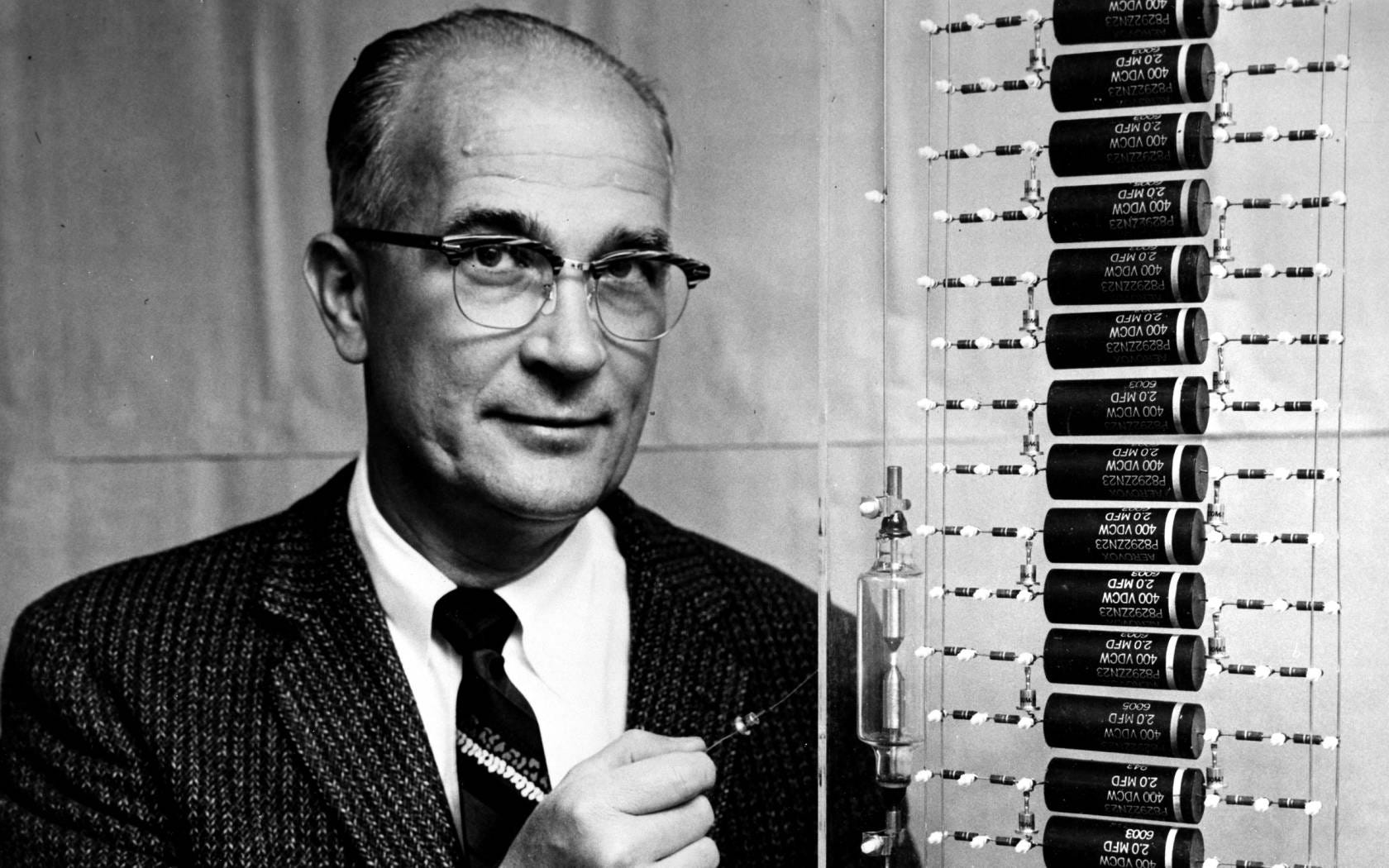
Major accomplishment
Led the Bell Labs group that produced the first working transistor (Bardeen and Brattain built the point-contact device; Shockley invented the junction transistor). Shared the 1956 Nobel Prize in Physics. In 1956 he founded Shockley Semiconductor Laboratory, the first silicon semiconductor company in what became Silicon Valley. Eight of his employees (the “Traitorous Eight”) left to found Fairchild Semiconductor, which later spun out Intel and much of the Valley’s chip industry.
Memorable quote
“It has today occurred to me that an amplifier using semiconductors rather than vacuum is in principle possible.”
(Laboratory notebook, 29 December 1939.)
Fun fact
Was an semipro rock climber with a first-ascend.
----
Takeaways
1. Intellect isn’t enough. Shockley got really far on brains alone, then his need to feel superior wrecked the teams, the company, and eventually his reputation. Brilliance can get you really far (like, a Nobel Prize), but it can’t make people like you.
2. When people leave and thrive without you, look inward before you look outward. Shockley blamed the world instead of his behavior. Which direction did you look after your last career change?
3. Keep a simple tracker (mood, habits, or a monthly page). You’ll be amazed how hard it is to believe your own BS when you have something to hold you accountable.
Keep exploring
- Article: Beckman, Shockley and the 60th Anniversary of the Birth of Silicon Valley
- Video: 391 San Antonio Rd. — A Semiconductor Documentary
- Book: Joel N. Shurkin, Broken Genius: The Rise and Fall of William Shockley, Creator of the Electronic Age