

Bio
1874-1964 (90)
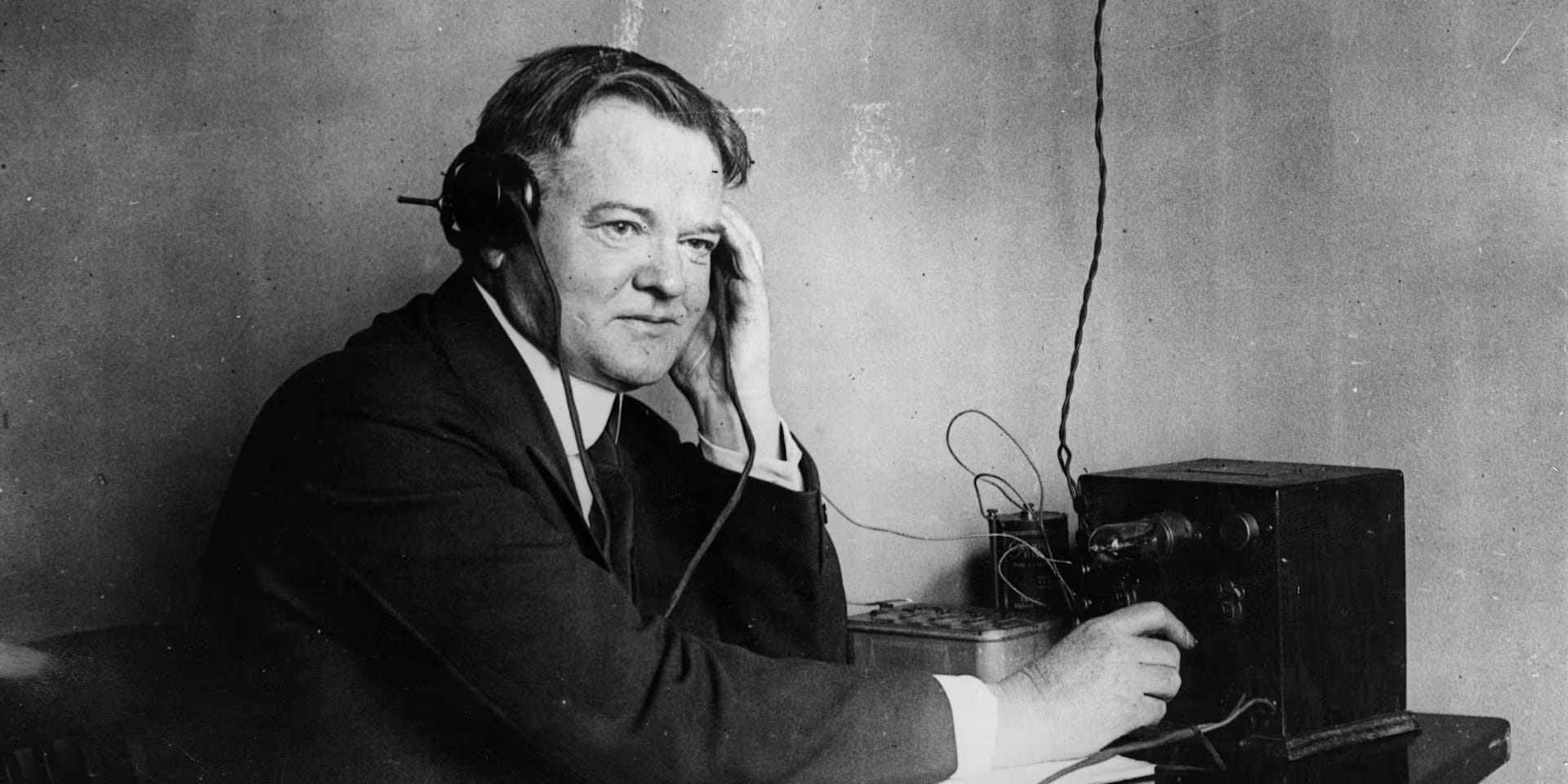
Born in West Branch, Iowa; orphaned young and raised partly in Oregon. Geology graduate of Stanford’s pioneer class (1895). Made his fortune as an international mining engineer (Australia, China, London), then lived and worked in DC as a relief organizer, Commerce Secretary, and 31st U.S. President.
Major accomplishment
Turned failing mines into profitable operations, built a fortune on the order of Ford and Edison’s, then applied the same operational skill to humanitarian relief. As head of the Commission for Relief in Belgium in World War I, he organized food for millions under occupation. As president, he pushed major public works (including the Hoover Dam and SF bridge). His engineering career got him to the White House, but his inability to inspire people through the Depression prevented him from staying there for a second term.
Quote
“The great liability of the engineer compared to men of other professions is that his works are out in the open where all can see them. His acts, step by step, are in hard substance. He cannot bury his mistakes in the grave like the doctors. He cannot argue them into thin air or blame the judge like the lawyers. He cannot, like the architects, cover his failures with trees and vines. He cannot, like the politicians, screen his shortcomings by blaming his opponents and hope that the people will forget. The engineer simply cannot deny that he did it. If his works do not work, he is damned”
(Article in “Engineer’s Week”)
Fun fact
He read two hours a night for fun from a young age. When U.S. booksellers gave the White House a 500-book “home library” in 1930, Hoover told a guest: “If they sent those here to educate me, I’m afraid it was too late. I’d read 85% of them before.”
Takeaways
Engineering skill can provide money and prestige, but leading machines is very different from leading people. Hoover’s optimizer tendencies failed him when the job required empathy, persuasion, and selling a vision.
Identify your likely engineer flaw (pride, stubbornness, perfectionism, or emotional flatness), get a baseline, and track it. (See my YouTube video below for tracking examples.) You are not trying to erase the flaw overnight. You are trying to chip away at it before it’s too late.
Write to yourself. Hoover blamed the economy, opponents, and “fear of the common man” after his defeat. He wrote to everyone else except himself. A dated notebook conversation with reality is cheaper insurance than waiting for a failed reelection, a stalled promotion, or flat download numbers to humble you.
Keep exploring
Article: Herbert Hoover: Life Before the Presidency (Miller Center)
Video: Remembering Herbert Hoover and the Commission for Relief in Belgium
Book: Kenneth Whyte, Hoover: An Extraordinary Life in Extraordinary Times